
Hair · Miyapur
PRP for Hair Loss in Miyapur, Hyderabad
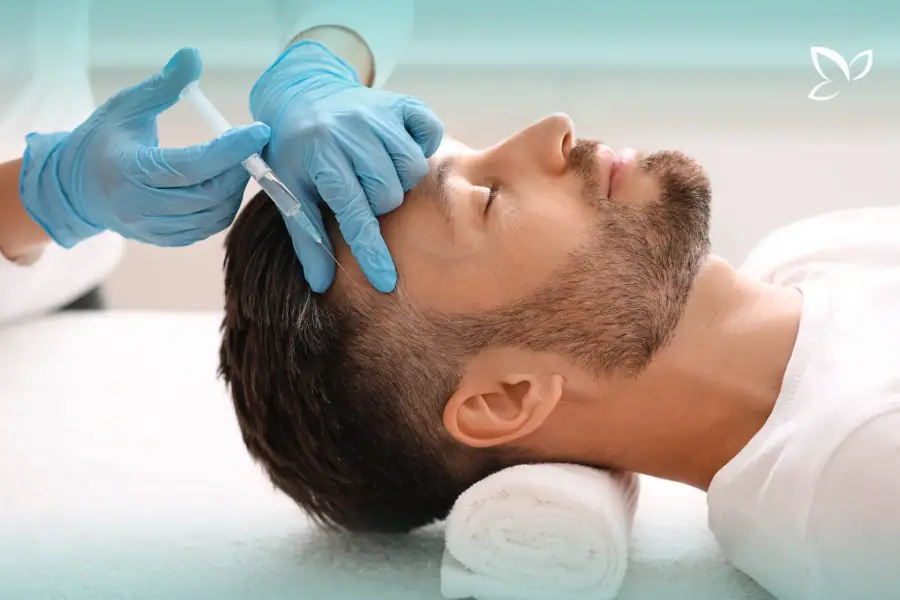
PRP uses a concentrated portion of your own blood, injected into the scalp, with the aim of supporting follicles in selected types of hair loss. It is not the right first step for every person who is shedding. Dr. L. Divya assesses hair loss at the Miyapur clinic before discussing PRP.
About this concern
The clinic lists PRP for hair loss and describes it as using the body’s own growth factors to support hair. Evidence is stronger for some patterns of androgenetic thinning than for scarring alopecias or untreated thyroid disease.
The homepage also names stem cell therapy and hair transplantation among approaches used for hair disorders. Those are separate decisions. This page does not treat them as automatic add-ons to PRP.
A session involves a blood draw, processing, and scalp injections. Comfort, cost, and the likely benefit should be clear before you proceed.
Hair concerns to distinguish first
- Widening partition or thinning at the crown
- Increased hair on the pillow or in the shower
- Smooth bald patches
- Scaling, pustules, or pain on the scalp
- Thinning after illness, childbirth, crash dieting, or a new medicine
Possible reasons
Pattern hair loss, telogen effluvium, alopecia areata, fungal infection, and scarring alopecias need different treatment.
Iron deficiency, thyroid disease, and some medicines contribute to shedding. Correcting a deficiency can matter more than any procedure.
When to consult a dermatologist
- Shedding has continued for more than a few weeks
- A family pattern of baldness is appearing earlier than you expected
- The scalp is itchy, scaly, or has bald patches
- You have been offered PRP without an examination
How the concern may be assessed
The scalp and hair density are examined. Dermoscopy or trichoscopy may be used.
History covers diet, periods, pregnancy, fever, surgery, and family pattern. Blood tests are requested when they would change the plan.
Treatment options and suitability
Treat the cause
Minoxidil, hormonal treatment in suitable patients, antifungal treatment, or immunotherapy for alopecia areata may be more appropriate than PRP. These are medical decisions.
PRP sessions
If PRP is suitable, it is planned as a series rather than a single injection. Intervals are set in clinic. Results reported in studies are modest and not universal.
Other restoration options
The clinic’s public pages mention stem cell therapy and hair transplantation in the context of hair disorders. Either would require its own assessment, donor-area review in the case of transplant, and a clear explanation of limits. They are not booked from this page alone.
What to expect from a consultation
- You may have scalp tenderness and pinpoint redness for a short time.
- Shedding can continue while a new plan starts. That does not always mean the plan has failed.
- Photographs in similar lighting help later comparison. They are not a guarantee of regrowth.
Limits, risks, and aftercare
- PRP does not regrow hair in long-standing scarring alopecia where follicles are destroyed.
- People with some blood or platelet disorders, or active scalp infection, are not routine candidates.
- The clinic does not publish a success percentage for PRP.
Why patients consult this clinic
Dr. L. Divya consults at Dr. L. Divya Skin Clinic in Miyapur. Her published profile lists MBBS and MD (DVL), more than 17 years in dermatology, and membership of IADVL. The plan for prp for hair loss is made after assessment, not from a fixed package.
/ FAQs
Questions patients ask
General answers about prp for hair loss at the Miyapur clinic. Your own plan is decided after examination.
No. PRP does not move follicles. Transplantation moves hair from a donor area and is a separate procedure, mentioned on the clinic homepage, and only considered after proper assessment.
Women with suitable patterns of thinning can be assessed. Pregnancy, cause of shedding, and blood results change the advice.
A small blood sample is processed so the platelet-rich portion can be placed in the scalp. It is done after the cause of hair loss is assessed, not as a walk-in add-on.
A short series is often discussed, then reviewed. The gap and the number depend on the diagnosis. One session is not presented as a cure.
Active scalp infection, pregnancy, certain blood or platelet problems, and shedding from a reversible cause can mean delaying or choosing another treatment.