
Laser · Miyapur
Laser Skin and Hair Treatment in Miyapur
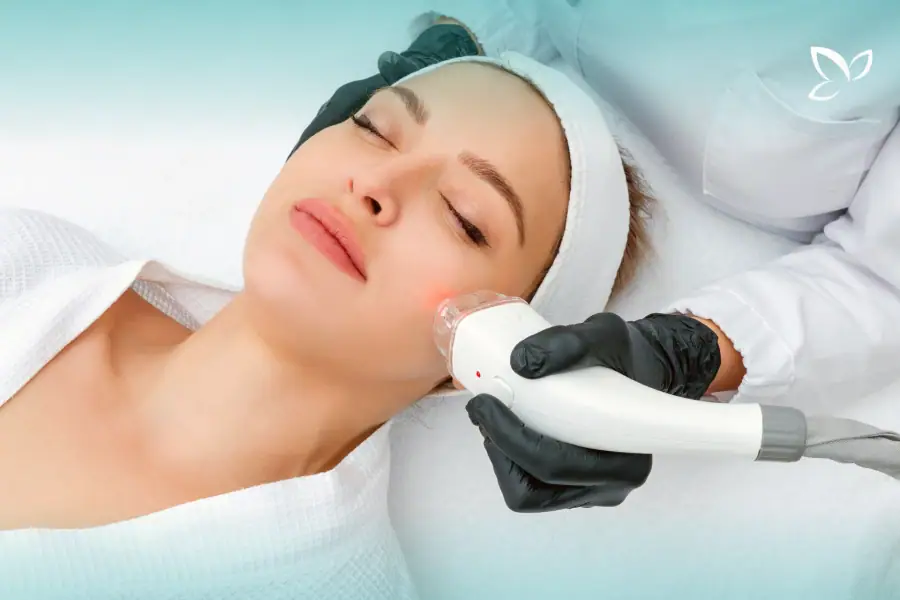
Laser treatment is not one procedure. Hair-reduction lasers, pigment lasers, and resurfacing devices do different jobs and suit different skin tones. Dr. L. Divya assesses whether a laser is appropriate at the Miyapur clinic before any session is booked.
About this concern
The clinic lists laser treatment for acne scars, pigmentation, and hair removal. The doctor’s published profile also refers to workshop training in laser procedures.
Device names and regulatory claims are not listed on the current public pages. This site does not invent a machine model or an approval label.
A consultation covers the concern, skin tone, recent sun exposure, medicines, and whether a non-laser option is safer.
Concerns people ask about
- Unwanted facial or body hair
- Flat pigmentation or selected tattoo-like pigment
- Acne scars with texture change
- Redness or visible vessels, where a vascular device would even be relevant
Possible reasons
Hair growth, melanin depth, and scar collagen are different targets. A device chosen for hair will not treat a scar, and the reverse is also true.
Recent tanning, photosensitive medicines, and active infection change risk.
When to consult a dermatologist
- You want hair reduction and have PCOS symptoms or sudden new hair growth
- A pigment patch has changed shape or colour
- You are pregnant, using isotretinoin, or have a history of keloid scars
- You have been told elsewhere that one session is enough
How the concern may be assessed
The area is examined in person. Photographs of the concern help discussion but do not replace the visit.
For hair reduction, hormonal contributors are considered so that laser is not used as the only step when a medical condition needs treatment.
A test spot is sometimes advised on darker skin tones before a full session.
Treatment options and suitability
Laser hair reduction
Sessions are spaced over the hair-growth cycle. Coarse dark hair responds differently from fine or light hair. Shaving is usually continued between visits; waxing and plucking are often paused because they remove the target.
Pigment and tone
Selected lesions can be treated with pigment-specific devices. Melasma is handled cautiously because heat and inflammation can darken it.
Texture and scars
Resurfacing or fractional treatments may be discussed for certain scars. Downtime, infection precautions, and the number of sessions vary. They are not offered for every scar type.
What to expect from a consultation
- Hair reduction is a course. Early sessions reduce hair; they rarely finish the job.
- Redness, swelling, or darkening can follow a session and should be reported if they are unexpected.
- Sun protection before and after treatment is part of safety, not an optional extra.
Limits, risks, and aftercare
- Laser does not permanently remove every follicle in one visit, and hormonal hair growth can continue.
- The clinic does not publish a guarantee of scar clearance.
- Home laser devices are not equivalent to a supervised medical session.
Why patients consult this clinic
Dr. L. Divya consults at Dr. L. Divya Skin Clinic in Miyapur. Her published profile lists MBBS and MD (DVL), more than 17 years in dermatology, and membership of IADVL. The plan for laser treatments is made after assessment, not from a fixed package.
/ FAQs
Questions patients ask
General answers about laser treatments at the Miyapur clinic. Your own plan is decided after examination.
Many people with medium and deep skin tones are treated safely when the device and settings are appropriate and the skin is not tanned. Safety is decided at examination, not from a general rule.
Hair reduction is commonly planned as multiple sessions. The number is estimated after seeing hair colour, site, and hormonal factors. It is an estimate, not a fixed package promise.
Different concerns need different settings and sometimes different devices. The clinic lists laser among its services. Suitability is decided in person, and a device model is not published here.
A recent tan raises the chance of pigment change. Tell the doctor about outdoor exposure, self-tan, and any new cream before a session is booked.
A test spot is used when it would change the decision, especially on deeper skin tones or a new area. It is not a guarantee that later sessions will be identical.